WK88 @ maraton189 666fw jemadi88 cinta99 koma69 pvp777 The Rise of Strategic Corruption. How States Weaponize Graft
by Philip Zelikow, Eric Edelman, Kristopher Harrison, and Celeste Ward Gventer – Foreign Affairs.
This article, with its prestigious authors from our foreign policy establishment, underscores the threat posed by authoritarian actors to undermine our freedom and democracy through various measures — that almost all involve the use of offshore financial secrecy, in one form or another. De-creating offshore is an urgent national security issue …
International Consortium of Investigative Journalists
How two decades of corrupt deals made Isabel dos Santos Africa’s wealthiest woman and left oil- and diamond-rich Angola one of the world’s poorest countries.
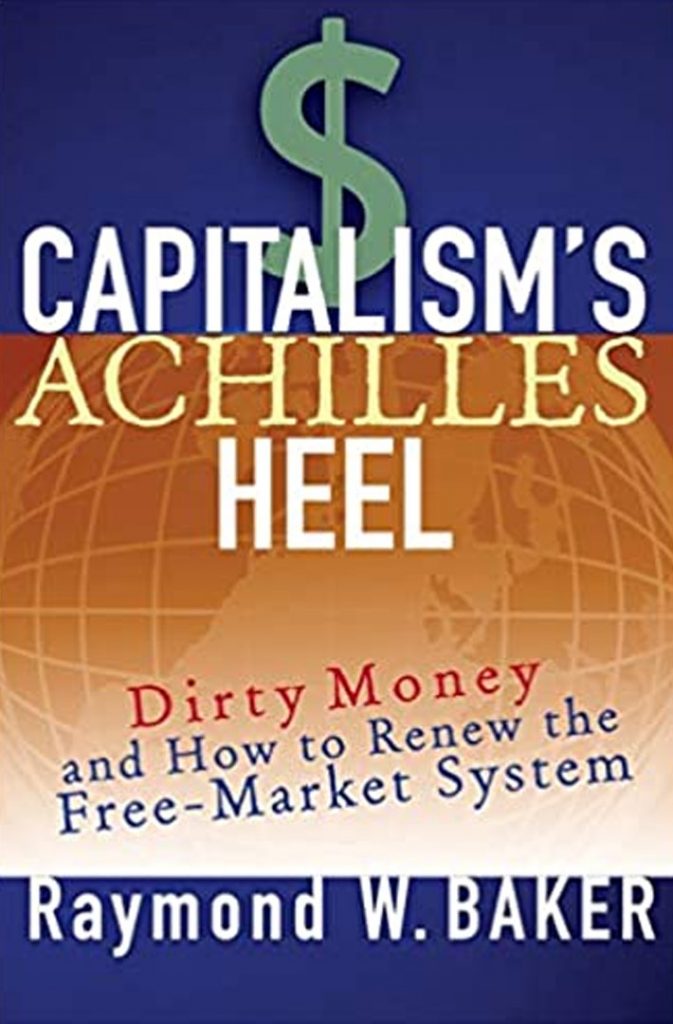
marko515 @ dexa51 raja82 wip888 dor34 rakutoto sawer31 Capitalism's Achilles Heel: Dirty Money and How to Renew the Free-Market System
Raymond Baker’s Capitalism’s Achilles Heel was the first book to attempt an explanation of the whole of the offshore problem, especially how offshore is so detrimental to capitalism. His own disgust with offshore began in Nigeria, where he was horrified by how the offshore system – or infrastructure — was used to spirit money out of Nigeria by foreigners and Nigerians alike, with the Nigerian oil boom subjecting the country to what is sometimes referred to as the “resource curse.”
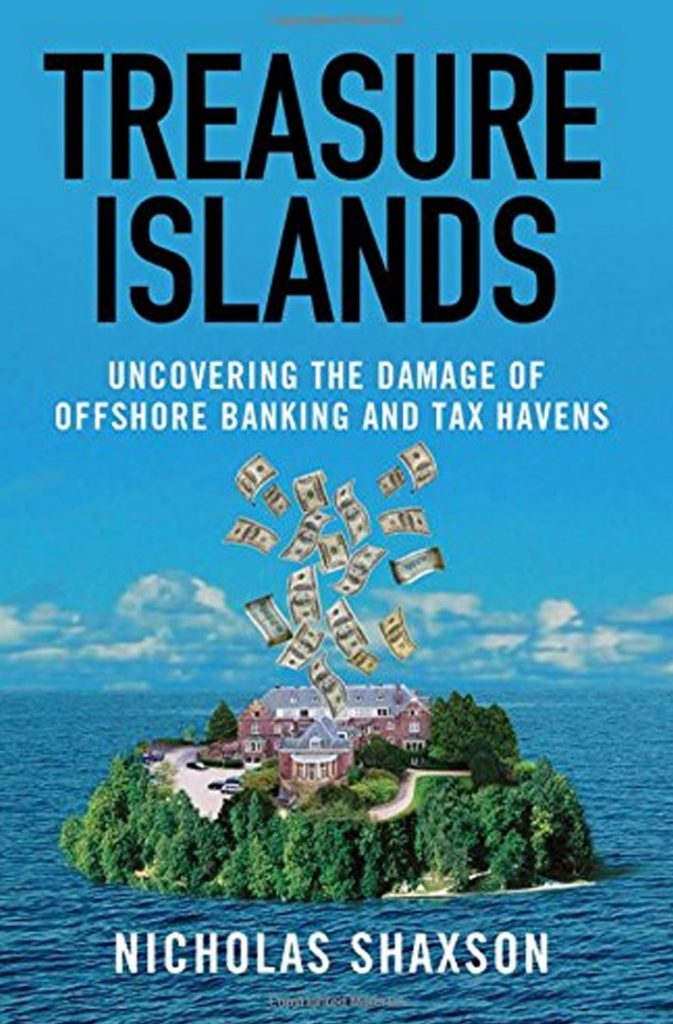
hits138 @ armpoin vinus4d wip888 aset56 jet61 axsistoto Treasure Islands: Uncovering the Damage of Offshore Banking and Tax Havens
Nick Shaxson’s classic focuses in particular on the role of the U.K. and its Territories and Crown Depencies as huge players in the offshore game. His chapter on the City of London is a must read – one comes away understanding how offshore is embedded at the heart of global finance and maintained with elegance and panache by snakes in suits. Part of de-creating offshore is seeing through the fancy suits and cufflinks to the moral rot and criminality.
pisingyok @ 77ag ular45 peri53 gc108 oyo60 mpvtogel The Dictator-Run Bank That Tells the Story of America’s Foreign Corruption
by Casey Michel & Ricardo Soares de Oliveira – Foreign Policy.
The BCCI bank scandal was huge – our own Jack Blum was intimately involved in the investigations of BCCI working for John Kerry at the time. This story has all the elements of what has since metastasized into a bigger problem – same story, but it’s all gotten bigger. Too big — $50 trillion in offshore secreted wealth doesn’t work –something’s gotta give.
Today a global infrastructure of offshore accounts, anonymous shell companies, and professional enablers have built a parallel dimension in the world’s financial system. The price of entry to this zone of wealth—a specialized attorney—is out of reach for all but the wealthy few. And the reward such a hire brings is well worth the price: access to a global financial space with minimal rules. Those exploiting this world are not merely a few bad apples, but a cross section of the world’s corporations and super rich, hailing from both authoritarian states and democracies.
The offshore world is more than just a Caribbean exception that exists well outside the U.S. financial system. The offshore world can be found everywhere, from U.S. states mass producing anonymous companies, to New York skyscrapers owned by mysterious figures. It stands at the very heart of how globalized capital functions. The results for most people are bad. There now exists a twin-track financial system: one for the normal citizen with clear tax obligations, and another where not only identifying yourself but paying your dues is optional.
The results have been not only the erosion of state resources and a boom in tax evasion, oligarchy, and inequality; the offshore world has also given an enormous boost to forces of authoritarianism, kleptocracy, and organized crime. Stealth wealth from hostile authoritarians today freely circulates throughout the United States. This does more than just make a mockery of cherished American ideals and the rule of law. Few realize the scale of this problem: Estimates put the value of offshore deposits at $50 trillion or more. These figures are not included in official economic statistics, meaning inequality in today’s world is a far graver problem than most metrics account for. This system, to quote Raymond Baker’s seminal work on the topic, has truly become “capitalism’s Achilles heel.”
This global infrastructure of offshore finance connects two of the most serious challenges faced by democratic states today: the threat from within of rising inequality, plutocracy, and failing state capacity, and the threat from without of rising authoritarian kleptocracies, which have used it to multiply their power and resources at home, interfere in our electoral processes, and extend their influence abroad. Only sustained reform can clean up capitalism, restore the level playing field between citizens and states, and reinforce democracy in the years ahead.
The Offshore Initiative hopes to serve as a platform to inform and inspire the policy debate for those seeking both to better understand this financial world and its nefarious consequences, and to discover how to begin dismantling it. To kick off the discussion, Offshore Initiative has invited some thought leaders to offer their perspectives. Senator Sheldon Whitehouse of Rhode Island explains its strategic centrality. Jim Henry speaks about the value of wealth held offshore (the $50 trillion or more) and its implications. Casey Michel looks at the U.S. role in mass producing anonymous companies. Jack Blum looks at offshore’s effects on inequality. Nicholas Shaxson has written about the perverse effects of offshore finance on the economy: the curse of over-financialization. Nino Evgenidze has written about the painful consequences of the offshore world on Georgia, and Daria Kaleniuk explains offshore’s effects on Ukraine. Ben Judah describes how we think a transatlantic alliance can de-create offshore. Drew Sullivan has looked at what it means for the global role of both the Kremlin and Russian organized crime. And Tom Mueller explores the role of whistleblowers in curtailing offshore, a critical issue.
As the United States enters a critical election period in the months ahead, Offshore Initiative will host discussions and publish work seeking to develop an action plan to deal with the problem. It will host a growing library of key texts and scandals as an educational resource. On the international front, Offshore Initiative will explore the need for a reformist alliance between the United States, European Union, and United Kingdom—the three groupings that together cover most of the world’s key secrecy jurisdictions and financial centers. Focusing at home, Offshore Initiative will assemble ideas for a future U.S. administration, with emphasis on giving law enforcement the resources it needs to work effectively.
Charles Davidson, Jack Blum, and Ben Judah are respectively Editor/Publisher, Senior Advisor, and Editor-at-Large of the Offshore Initiative.
marlin02 @ jakpot88 777yk slot banjir66 pedas75 spg45 rimba34 Where Is Our Tax Money When We Need It The Most?
With an estimated $100 billion lost a year in tax revenue and poverty on the rise, it is time to start cracking down on offshore finance and tax havens.
lala110 @ mashoki889 ws055 dd200m wf66 v39 gomax45 Senate Testimony Regarding Offshore from our Senior Advisor and Editor/Publisher
Jack Blum on Offshore, Testimony to Senate Finance Committee. For the first time, the Senate Finance Committee began to understand the depth of the offshore problem, and the limited amount of resource that was being put into it by the IRS.
Charles Davidson, Testimony to the Senate Judiciary Committee. The importance of Anti-Money Laundering in Enhancing the Integrity of our Financial System, and Defending our Political System.
Three years after the “Laundromat” was exposed as a criminal financial vehicle to move vast sums of money out of Russia, journalists now know how the complex scheme worked – including who ended up with the $20.8 billion and how, despite warnings, banks failed for years to shut it down …
The FT’s Stefania Palma explains the corruption and money-laundering inquiry at the state development and investment fund in which charges have been filed against two former Goldman Sachs bankers, local financier Jho Low and ex-1MDB employee Jasmine Loo Ai Swan.